
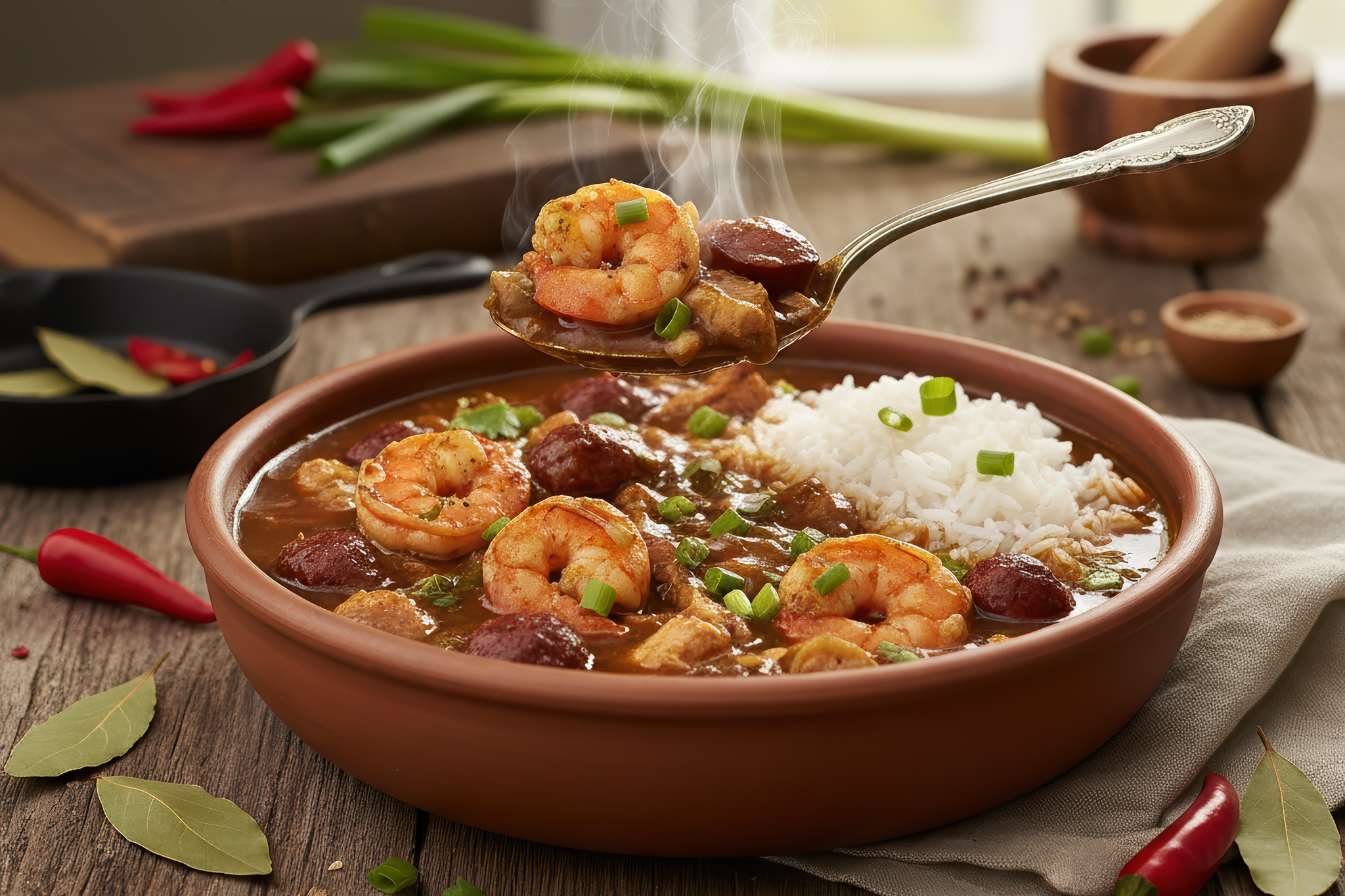
In New Orleans, there are a few things you just do not argue about, unless you are talking about gumbo. Then all bets are off. Everyone has their own version, their own memories, their own “right” way to make it. From Uptown kitchens to bayou backyards, gumbo is not just a dish, it is a point of pride.
Ask ten locals how to make gumbo and you will get ten very different answers. Some will swear it starts with a dark, nearly chocolate colored roux, stirred low and slow until it smells like toasted nuts. Others will insist that lighter roux brings out more flavor from the vegetables and seafood. There are those who will not touch a pot without okra, while others think that adding it ruins the texture. Tomatoes are practically fighting words in some neighborhoods.
Seafood gumbo might reign in the French Quarter, filled with shrimp, crab, and oysters, while chicken and andouille gumbo is the comfort food of choice for many Creole families. Then there is duck gumbo, gumbo z’herbes, and even turkey gumbo made from leftovers after Thanksgiving. Each version tells a story of geography, heritage, and the hands that stirred the pot.
For many, gumbo is more than flavor. It is a history lesson in a bowl. The word itself likely comes from the West African term for okra, ki ngombo, while its techniques owe as much to French culinary tradition as they do to Choctaw filé powder. Over generations, those ingredients simmered together into something uniquely New Orleans.
So, is there a right way to make gumbo? Not a chance. The beauty of it lies in its imperfection, its evolution, and the way every cook puts a little of themselves into the pot. Gumbo is not about following rules, it is about honoring roots, stirring with patience, and feeding the people you love.
In this city, every bowl has a story, and no two stories ever taste quite the same.


 The Pelican Star
Leave a comment